
The State of Public Safety Connectivity: Challenges, Technologies, and What Agencies Need Now

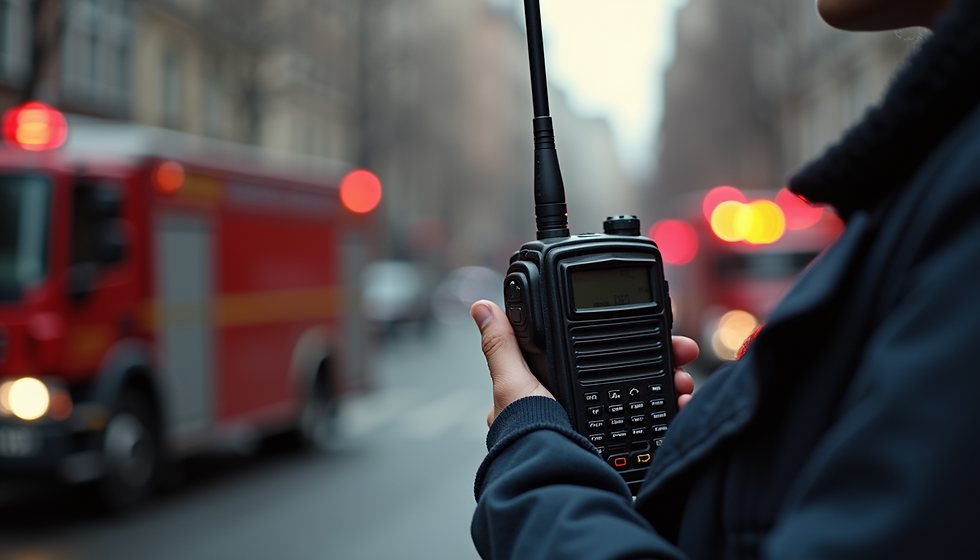
Public safety connectivity is the communications infrastructure that keeps emergency agencies functional during their most demanding moments.
Body cameras stream HD video. CAD systems push real-time incident data. Drones relay aerial feeds. GPS tracks every unit. All of it requires bandwidth — and all of it requires uptime.
According to the National Public Safety Telecommunications Council (NPSTC), data demands per first responder have increased by 400% since 2018. Yet for many agencies, the underlying connectivity infrastructure has not kept pace.
This post examines the current state of public safety connectivity — the challenges, the technologies in use today, and what agencies must do to close the gap.
Why Public Safety Connectivity Is Under Pressure
The U.S. public safety communications market was valued at $14.7 billion in 2022 (Grand View Research) and is growing at 11.3% annually.
That growth signals a sector under serious strain. Demand is outpacing the infrastructure built to support it.
Three Structural Challenges Facing Public Safety Connectivity Today
1. Coverage Gaps
30% of U.S. land area still lacks adequate LTE coverage (NTIA, 2022).Rural and tribal agencies are the most exposed.
2. Network Congestion
During mass casualty events, civilian and responder traffic compete for the same tower capacity, slowing down critical communications.
3. Budget Constraints
Small and mid-sized agencies often lack the procurement resources needed to replace aging infrastructure and deploy modern connectivity solutions.
Technologies Driving Modern Public Safety Connectivity
Public safety connectivity has evolved far beyond traditional P25 radio systems and basic 4G modems.
Current Tier-1 Technologies in Active Agency Use
FirstNet — AT&T’s dedicated public safety broadband network, serving 21,000+ agencies (2023)
T-Priority — T-Mobile’s public safety priority access service on 5G infrastructure
Multi-carrier LTE/5G bonding — Aggregates 2–4 carriers for redundancy and maximum throughput
LEO satellite (Starlink, Iridium) — Low-earth orbit coverage for disaster zones with no cellular signal
Mesh networking — Device-to-device connectivity for isolated teams and degraded network environments
Urban vs. Rural Public Safety Connectivity: Two Different Problems
Urban and rural agencies face very different connectivity challenges — almost opposite in nature.
Urban Public Safety Connectivity Challenges
Severe network congestion during large-scale incidents and mass gatherings
Cybersecurity exposure when responders use shared or public networks
Signal degradation in tunnels, underground facilities, and dense building clusters
Rural Public Safety Connectivity Challenges
No cellular coverage across large geographic response areas
Tower damage during wildfires, floods, and ice storms
Longer on-scene durations requiring extended connectivity reliability
Building a Resilient Public Safety Connectivity Strategy
The most effective agencies do not rely on a single solution — they layer their connectivity.
Recommended Three-Layer Public Safety Connectivity Stack
Primary LayerMulti-carrier LTE/5G using FirstNet plus commercial carrier bonding
Secondary LayerLEO satellite (Starlink or equivalent) for automatic failover when cellular networks go down
Tertiary LayerMesh radio or local Wi-Fi for teams operating in signal-dead zones
According to CISA’s Emergency Communications Division, agencies using layered
communication strategies recover 40% faster from major incident communication failures.
What Agencies Should Demand From a Public Safety Connectivity Vendor
When evaluating solutions, agencies should require:
Sub-2-second failover between all network layers
End-to-end AES-256 encryption for all data in transit
24/7 remote network monitoring for fleet visibility
IP67-rated hardware for rugged field deployment
Verified compliance with FirstNet, PSAP, and applicable NFPA standards
ResponseMesh: Purpose-Built for Public Safety Connectivity
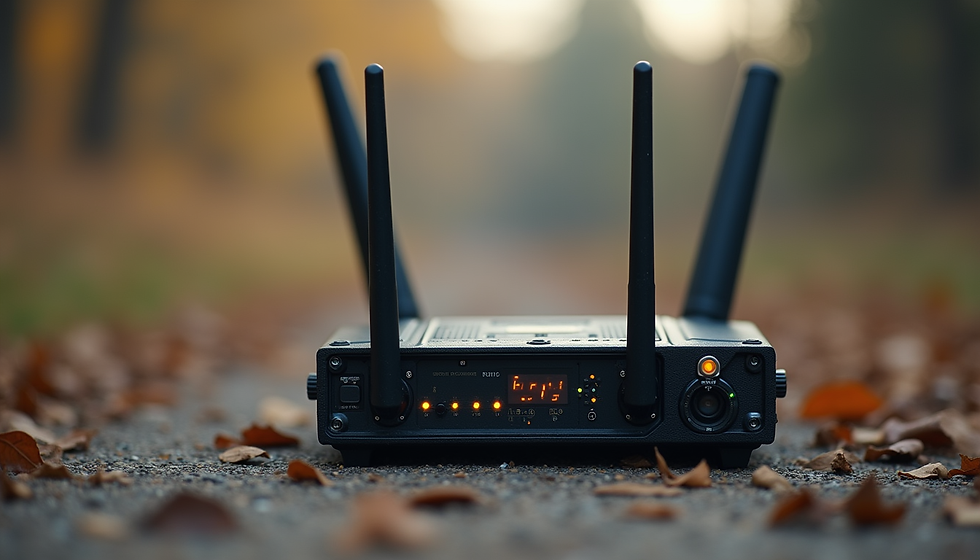
ResponseMesh was designed specifically for modern public safety connectivity demands.
The platform combines:
Multi-carrier LTE bonding
Integrated satellite failover
Centralized fleet monitoring dashboard
All in one system built for real-world field conditions.
Agencies using ResponseMesh eliminate the need to manage separate systems for cellular, satellite, and monitoring — everything operates within one unified platform.
Final Thoughts
Public safety connectivity is no longer optional — it is mission-critical infrastructure.
As data demands continue to grow, agencies that invest in layered, resilient connectivity solutions will be better positioned to respond faster, operate safer, and maintain communication when it matters most.

Comments