
5 Reasons Emergency Response Connectivity Fails — and How to Fix Each One

Emergency response connectivity failure is not a rare edge case. It is the most documented operational breakdown in disaster response across the United States.
A 2022 FEMA After-Action Report found that 68% of declared disaster responses identified communication failure as a primary operational breakdown. Post-incident reviews consistently rank it as the #1 preventable issue.
The good news is that each failure has a proven solution. Understanding the root cause of emergency response connectivity failure is the first step toward building a system that avoids repeating it.
Here are the five most common reasons connectivity fails — and exactly how to fix each one.
Reason 1: Over-Reliance on a Single Carrier Breaks Emergency Response Connectivity
One carrier means one point of failure. When that carrier’s tower is damaged, congested, or loses power, the entire team loses connectivity.
The Data
FCC records show 25%+ of cell towers failed during Hurricane Maria (2017)
Over 1,200 cell sites went offline during the 2023 Maui wildfires
Rural tower failure rates are 3x higher than urban areas during severe weather (NTIA, 2022)
The Fix
Deploy multi-carrier bonding (FirstNet, Verizon, T-Mobile simultaneously)
Configure sub-1-second automatic failover
Treat carriers as parallel layers, not primary and backup
Reason 2: No Satellite Backup Leaves Emergency Response Connectivity Exposed
Cellular infrastructure is ground-based — and disasters destroy ground infrastructure.
Without satellite backup, every tower outage becomes a communications blackout.
The Fix
Integrate LEO satellite (Starlink or Iridium Certus) as a secondary layer
Configure automatic failover — manual switching is too slow in the field
Equip vehicles and teams with satellite-ready systems or portable kits
Reason 3: Insufficient Bandwidth Cripples Modern Emergency Response Connectivity
Modern field operations require far more bandwidth than legacy systems were designed to handle.
Body cameras: 2–8 Mbps per stream
Drone feeds: 4–20 Mbps per feed
CAD and GIS: 1–5 Mbps combined
VoIP: 0.1–0.5 Mbps per call
A single command vehicle with multiple active users can require 75–150 Mbps of continuous throughput, which most single-carrier connections cannot sustain.
The Fix
Upgrade to 5G-capable hardware where available
Use carrier aggregation to combine bandwidth across multiple networks
Apply QoS rules to prioritize mission-critical applications
Reason 4: No Purpose-Built Infrastructure Creates Emergency Response Connectivity Gaps
Many agencies still rely on personal smartphones as hotspots, introducing serious risks.
Inconsistent coverage with no priority access
Security vulnerabilities from unmanaged devices
Hardware not designed for field conditions
The Fix
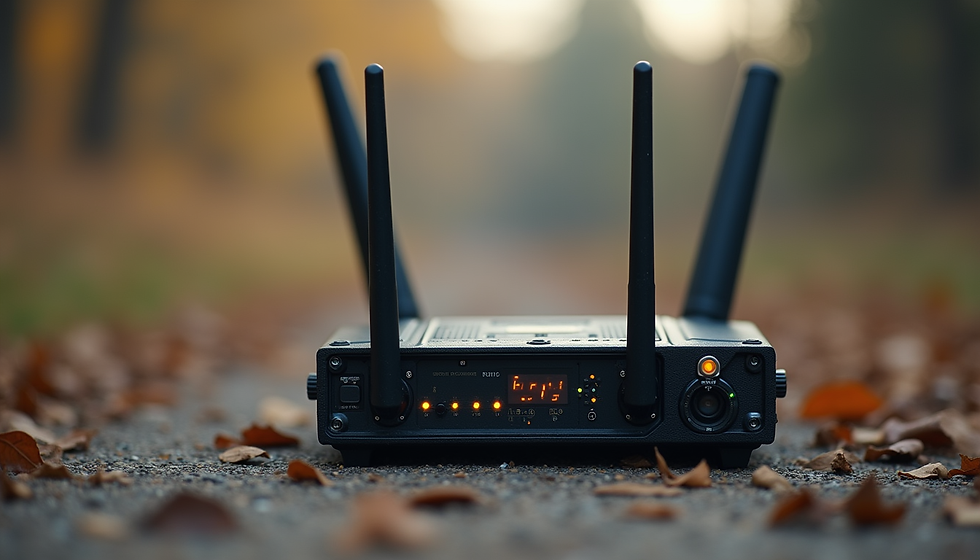
Install purpose-built vehicle routers with ruggedized enclosures
Ensure compatibility with FirstNet priority access
Provide secure, encrypted Wi-Fi for all personnel and devices
Reason 5: No Monitoring Creates Invisible Emergency Response Connectivity Failures
If agencies cannot see their network performance, they cannot manage it effectively.
Problems that go unnoticed before an incident often become critical failures during one.
The Fix
Deploy centralized fleet-wide monitoring dashboards
Set automated alerts for signal issues and failover events
Perform regular remote diagnostics
Require vendors to provide 24/7 monitoring and SLA-backed support
ResponseMesh: Fixing All Five Emergency Response Connectivity Failures in One Platform
Each of these failures stems from fragmented or outdated connectivity systems.
ResponseMesh solves them all in a single integrated platform:
Multi-carrier bonding removes single-carrier dependency
Satellite failover ensures continuity during infrastructure outages
Purpose-built hardware replaces unreliable consumer devices
Centralized monitoring provides full visibility across all units
One platform. Every failure mode addressed.
Final Thoughts
Emergency response connectivity failure is predictable — and preventable.
Agencies that address these five core issues can build resilient systems that maintain communication under the most extreme conditions.

Comments